Imagen principal
Dirección
Plaza de los Fueros 5 (Oficina de Turismo)
Teléfono
948 84 80 58
Categoría
Ubicación
42.0614, -1.6058
Descripción corta
Visitor route
Descripción larga
The first thing a visitor coming from Pamplona will discover in the city is the Bridge over the Ebro River, built in the 9th century by the Arabs, with its 17 arches and 360m long. They will enter the city under the railway tracks and will find the Romanesque Church of La Magdalena, built on a Mozarabic temple in the 12th century and declared a national monument.
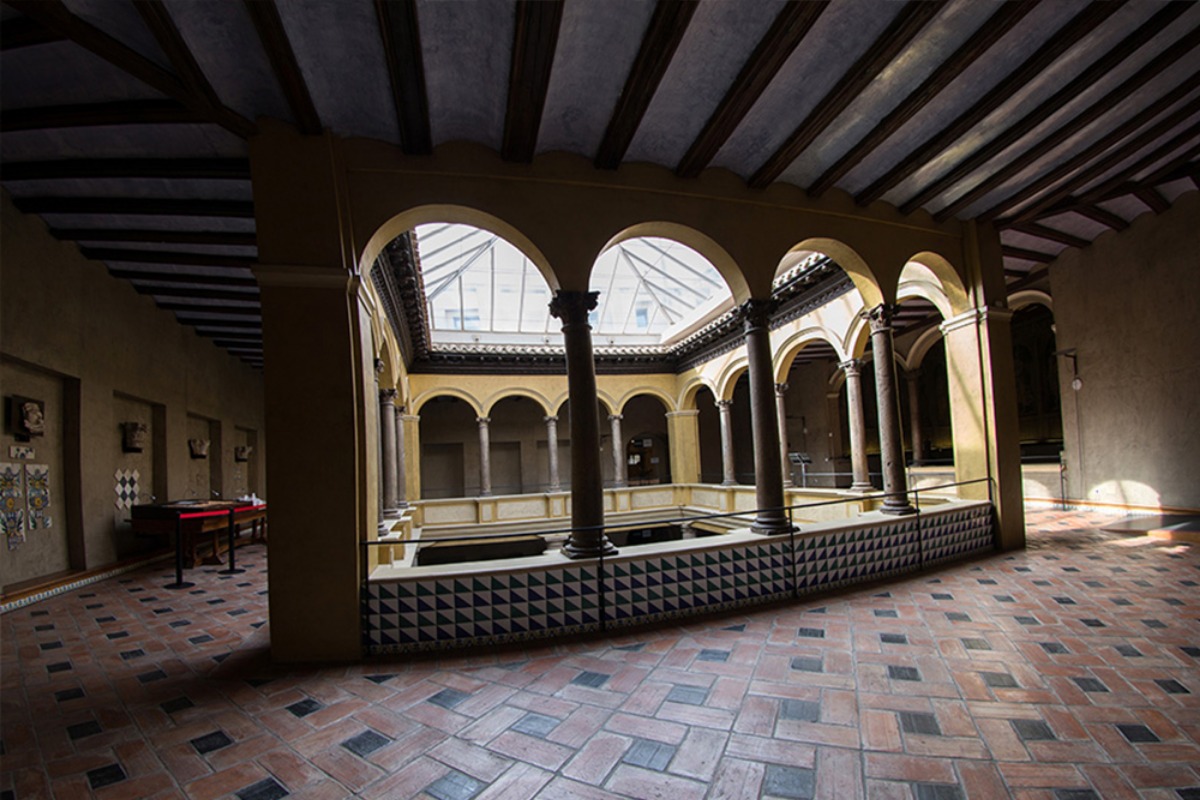
Portal Street will lead us through Magallón Street to the 16th-century Palace of the Marquis of San Adrián, which stands out for its wooden eaves, its Renaissance courtyard, and its staircase with its paintings depicting the Graces. We will again lead to Portal Street, which will lead us to the door of Tudela Cathedral, known as the Virgin's Gate.
The Cathedral was built around 1180 on the remains of an old mosque. Circling the Cathedral, we reach the Puerta del Juicio (Gate of Judgement), influenced by French Gothic architecture. Next to it, we find the Tudela Museum in the Deanery Palace, which provides access to the Cathedral's 12th-century cloister and the 15th-century Mudejar chapel, apparently built on the site of Tudela's main synagogue.
Next to the Cathedral is the Town Hall, dating from the 16th century, although it has been rebuilt later. The rear façade of the Town Hall faces Calle de la Rua, which was the main street in the 16th century and where you will find several Plateresque mansions (Casa del Almirante, Casa de los Ibañez Luna, etc.). Calle Pasaje will make visitors imagine the time when Arabs, Jews, and Christians lived together in Tudela and will lead them to Plaza Mercadal, where the Castel Ruiz Cultural Center and the Church of San Jorge, a former Jesuit convent, are located.
From this square you can see the rear façade of the Marqués de Huarte Palace, built in the 18th century, featuring an impressive imperial staircase with a dome and lantern.
The main façade opens onto Herrerías Street, which became the main street in the 18th century and is also home to the neoclassical Casa de Los Condes de Heredia Espinola with Rococo decoration.
This tour will end at the Plaza de los Fueros, which marks the transition between the old town and modern Tudela and was built in 1687 as a bullring.
Portal Street will lead us through Magallón Street to the 16th-century Palace of the Marquis of San Adrián, which stands out for its wooden eaves, its Renaissance courtyard, and its staircase with its paintings depicting the Graces. We will again lead to Portal Street, which will lead us to the door of Tudela Cathedral, known as the Virgin's Gate.
The Cathedral was built around 1180 on the remains of an old mosque. Circling the Cathedral, we reach the Puerta del Juicio (Gate of Judgement), influenced by French Gothic architecture. Next to it, we find the Tudela Museum in the Deanery Palace, which provides access to the Cathedral's 12th-century cloister and the 15th-century Mudejar chapel, apparently built on the site of Tudela's main synagogue.
Next to the Cathedral is the Town Hall, dating from the 16th century, although it has been rebuilt later. The rear façade of the Town Hall faces Calle de la Rua, which was the main street in the 16th century and where you will find several Plateresque mansions (Casa del Almirante, Casa de los Ibañez Luna, etc.). Calle Pasaje will make visitors imagine the time when Arabs, Jews, and Christians lived together in Tudela and will lead them to Plaza Mercadal, where the Castel Ruiz Cultural Center and the Church of San Jorge, a former Jesuit convent, are located.
From this square you can see the rear façade of the Marqués de Huarte Palace, built in the 18th century, featuring an impressive imperial staircase with a dome and lantern.
The main façade opens onto Herrerías Street, which became the main street in the 18th century and is also home to the neoclassical Casa de Los Condes de Heredia Espinola with Rococo decoration.
This tour will end at the Plaza de los Fueros, which marks the transition between the old town and modern Tudela and was built in 1687 as a bullring.
Destacado
Desactivado