Imagen principal
Dirección
Plaza de los Fueros 5 (Oficina de Turismo)
Teléfono
948 84 80 58
Categoría
Ubicación
42.06348, -1.60565
Descripción corta
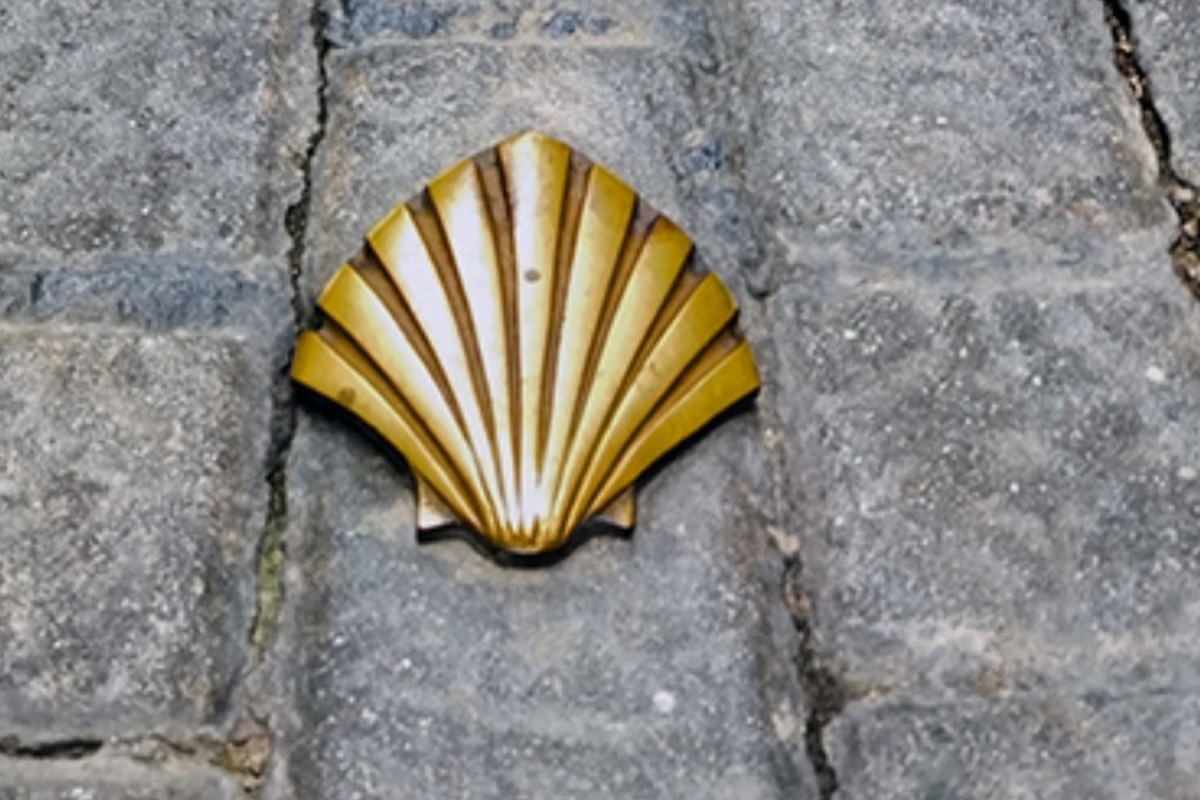
As it passes through Tudela it is marked by bronze shells.
Descripción larga
The Ebro Way of St. James is one of the historic routes to Santiago de Compostela. It welcomed pilgrims from the Mediterranean who followed the great Ebro River as a reference point for approaching the French Way. It begins in Tortosa and runs upstream alongside the Ebro, passing through Gandesa, Caspe, Zaragoza, Tudela, Alfaro, and Calahorra to Logroño, where it joins the route that descends from Roncesvalles. It crosses Navarre for approximately 40 km until it emerges in the Rioja region between Castejón and Alfaro.
This road enters Navarra through the town of Cortes.
The most emblematic building in Cortes is its castle. Dating from the 12th century, its image is linked to that of the Navarrese king Charles III, who often stayed there on his hunting trips. In the 16th century, the castle was renovated, acquiring the character of a stately palace with the current walled enclosure of massive semicircular towers flanking the entrance. Further renovations were made in the 19th century, such as the Baroque coat of arms of the Jaureguizar family, which was placed on the main entrance. The current Public Park was formerly the castle's vegetable garden. Today, it has become a park of great naturalistic value, with different species of ducks, geese, and swans in the pond. The Parish Church of San Juan Bautista, whose construction began in the second half of the 16th century, completes this monumental complex. It is also worth noting that Cortes has one of the most notable Iron Age settlements in Spain, on the site of Cerro de la Cruz.
Once we have crossed Cortes, and following the road towards Buñuel, 2 km further on we come to the Imperial Canal, designed in 1528 by Emperor Charles V and completed in the 18th century by Don Ramón de Pignatelli, who died having extended the canal past Zaragoza, but without achieving his great dream of extending it to the sea.
After walking about 10 kilometers through agricultural land and the waters of the canal, you reach Ribaforada, a town linked to the development of irrigated agriculture, located on the left, on the other side of the canal.
Continuing along the path for another five kilometers, we reach El Bocal, the birthplace of the Imperial Canal, well worth a visit for its tranquility and beautiful landscape. Here, you can see the Old Dam and the so-called Palace of Charles V, a building with Mudejar features. The gardens surrounding the building date back to the last century, and note a hundred-year-old oak tree that has been declared a Natural Monument. A road leads to the other end of the river bend, where the so-called House of the Gates and the new dam, built in 1790, are located.
We'll cross a bridge over an auxiliary canal and, before the entrance gate to the El Carrizal estate, we'll skirt this large estate and approach the railway track. This will take us to Tudela, a city we enter by crossing a bridge over the railway track.
The Camino de Santiago as it passes through Tudela is marked by bronze scallop shells that indicate first how to get to the Cathedral and second how to leave the city towards Castejón.
Thus, the scallop shells, a symbol of the Jacobean pilgrimage, indicate the location of the Tudela Municipal Hostel, which is both a youth hostel and a pilgrim hostel.
We soon arrive at the city's historic center, a network of narrow, winding streets with parapet walkways, staircases, etc. This medieval structure is enjoyed by walking around, and in this way we discover corners that tell us that it was already inhabited in Muslim times, that there was also a very populated Jewish quarter in the Middle Ages, coexisting with the Christian culture of which we have beautiful examples in different religious buildings.
Without straying from what the scallop shells indicate, the Renaissance building of the Marquis of San Adrián Palace first catches our attention. In the Plaza de San Jaime, on the corner of Verjas and Roso streets, we see the Dean's Palace, a building whose construction began in the 15th century and currently houses the Tudela Museum. As we leave this museum, the "Puerta del Juicio" (Gate of Judgment) of the Tudela Cathedral awaits us. It presents a rich and varied representation of the Last Judgment with the Just and the Damned, while also showing us what medieval Tudela society and its customs were like at that time.
Right there, we'll find the Tudela Tourist Office or Meeting Point, where we can gather all the information we need for our trip and also get our Pilgrim's Credential stamped.
We continue along the same street, coming across two more unique buildings: the Town Hall and the Muñoz Sola Museum of Modern Art. This museum is a new addition to the city and houses a collection of 19th and 20th-century paintings.
It's at this point that the shells indicate we should turn right, with the clear objective of continuing along the edge of the cathedral building, as far as Portal Street. It's also definitely worth seeing two other doorways with Romanesque decorations, the Baroque tower, the painted roof on the south side, and so on.
Portal Street takes us directly to the Magdalena Church.
And now we see the bridge over the Ebro River, a symbol of the city, as it is the central image of its coat of arms.
At the foot of the bridge, there's a sign indicating the route ahead. It's a bike and pedestrian path that runs parallel to the train tracks, without having crossed the bridge. We leave the city heading toward Castejón through an area of special ecological value, Los Sotos del Ebro.
Finally, the last town we come across is Castejón.
This town is an important railway hub. If you stroll through this town and enter the Church of San Francisco Javier, you'll see an interesting 16th-century Mannerist altarpiece. The station's fort also draws the traveler's attention, and a visit to the Railway Museum is also recommended.
We'll soon be leaving the Autonomous Community of Navarre, continuing our route in Alfaro.
Have a good trip and have a good journey!
This road enters Navarra through the town of Cortes.
The most emblematic building in Cortes is its castle. Dating from the 12th century, its image is linked to that of the Navarrese king Charles III, who often stayed there on his hunting trips. In the 16th century, the castle was renovated, acquiring the character of a stately palace with the current walled enclosure of massive semicircular towers flanking the entrance. Further renovations were made in the 19th century, such as the Baroque coat of arms of the Jaureguizar family, which was placed on the main entrance. The current Public Park was formerly the castle's vegetable garden. Today, it has become a park of great naturalistic value, with different species of ducks, geese, and swans in the pond. The Parish Church of San Juan Bautista, whose construction began in the second half of the 16th century, completes this monumental complex. It is also worth noting that Cortes has one of the most notable Iron Age settlements in Spain, on the site of Cerro de la Cruz.
Once we have crossed Cortes, and following the road towards Buñuel, 2 km further on we come to the Imperial Canal, designed in 1528 by Emperor Charles V and completed in the 18th century by Don Ramón de Pignatelli, who died having extended the canal past Zaragoza, but without achieving his great dream of extending it to the sea.
After walking about 10 kilometers through agricultural land and the waters of the canal, you reach Ribaforada, a town linked to the development of irrigated agriculture, located on the left, on the other side of the canal.
Continuing along the path for another five kilometers, we reach El Bocal, the birthplace of the Imperial Canal, well worth a visit for its tranquility and beautiful landscape. Here, you can see the Old Dam and the so-called Palace of Charles V, a building with Mudejar features. The gardens surrounding the building date back to the last century, and note a hundred-year-old oak tree that has been declared a Natural Monument. A road leads to the other end of the river bend, where the so-called House of the Gates and the new dam, built in 1790, are located.
We'll cross a bridge over an auxiliary canal and, before the entrance gate to the El Carrizal estate, we'll skirt this large estate and approach the railway track. This will take us to Tudela, a city we enter by crossing a bridge over the railway track.
The Camino de Santiago as it passes through Tudela is marked by bronze scallop shells that indicate first how to get to the Cathedral and second how to leave the city towards Castejón.
Thus, the scallop shells, a symbol of the Jacobean pilgrimage, indicate the location of the Tudela Municipal Hostel, which is both a youth hostel and a pilgrim hostel.
We soon arrive at the city's historic center, a network of narrow, winding streets with parapet walkways, staircases, etc. This medieval structure is enjoyed by walking around, and in this way we discover corners that tell us that it was already inhabited in Muslim times, that there was also a very populated Jewish quarter in the Middle Ages, coexisting with the Christian culture of which we have beautiful examples in different religious buildings.
Without straying from what the scallop shells indicate, the Renaissance building of the Marquis of San Adrián Palace first catches our attention. In the Plaza de San Jaime, on the corner of Verjas and Roso streets, we see the Dean's Palace, a building whose construction began in the 15th century and currently houses the Tudela Museum. As we leave this museum, the "Puerta del Juicio" (Gate of Judgment) of the Tudela Cathedral awaits us. It presents a rich and varied representation of the Last Judgment with the Just and the Damned, while also showing us what medieval Tudela society and its customs were like at that time.
Right there, we'll find the Tudela Tourist Office or Meeting Point, where we can gather all the information we need for our trip and also get our Pilgrim's Credential stamped.
We continue along the same street, coming across two more unique buildings: the Town Hall and the Muñoz Sola Museum of Modern Art. This museum is a new addition to the city and houses a collection of 19th and 20th-century paintings.
It's at this point that the shells indicate we should turn right, with the clear objective of continuing along the edge of the cathedral building, as far as Portal Street. It's also definitely worth seeing two other doorways with Romanesque decorations, the Baroque tower, the painted roof on the south side, and so on.
Portal Street takes us directly to the Magdalena Church.
And now we see the bridge over the Ebro River, a symbol of the city, as it is the central image of its coat of arms.
At the foot of the bridge, there's a sign indicating the route ahead. It's a bike and pedestrian path that runs parallel to the train tracks, without having crossed the bridge. We leave the city heading toward Castejón through an area of special ecological value, Los Sotos del Ebro.
Finally, the last town we come across is Castejón.
This town is an important railway hub. If you stroll through this town and enter the Church of San Francisco Javier, you'll see an interesting 16th-century Mannerist altarpiece. The station's fort also draws the traveler's attention, and a visit to the Railway Museum is also recommended.
We'll soon be leaving the Autonomous Community of Navarre, continuing our route in Alfaro.
Have a good trip and have a good journey!
Destacado
Desactivado