Descripción corta
Angel and Volatín ceremonies among other events.
Descripción larga
The traditional, multi-secular, and inseparable Ceremonies of the Angel and the Volatín, with their origin in the Brotherhood of the Blessed Sacrament, belong by right to the culture of Tudela since the 14th century, forming part of its essence and have been declared on February 19, 2002 'Festival of National Tourist Interest'.
These ceremonies have not always been celebrated as they are today or in the same places, but at all times their naivety, their religious meaning and therefore their popular essence have been and are fully maintained.
The Volatín:
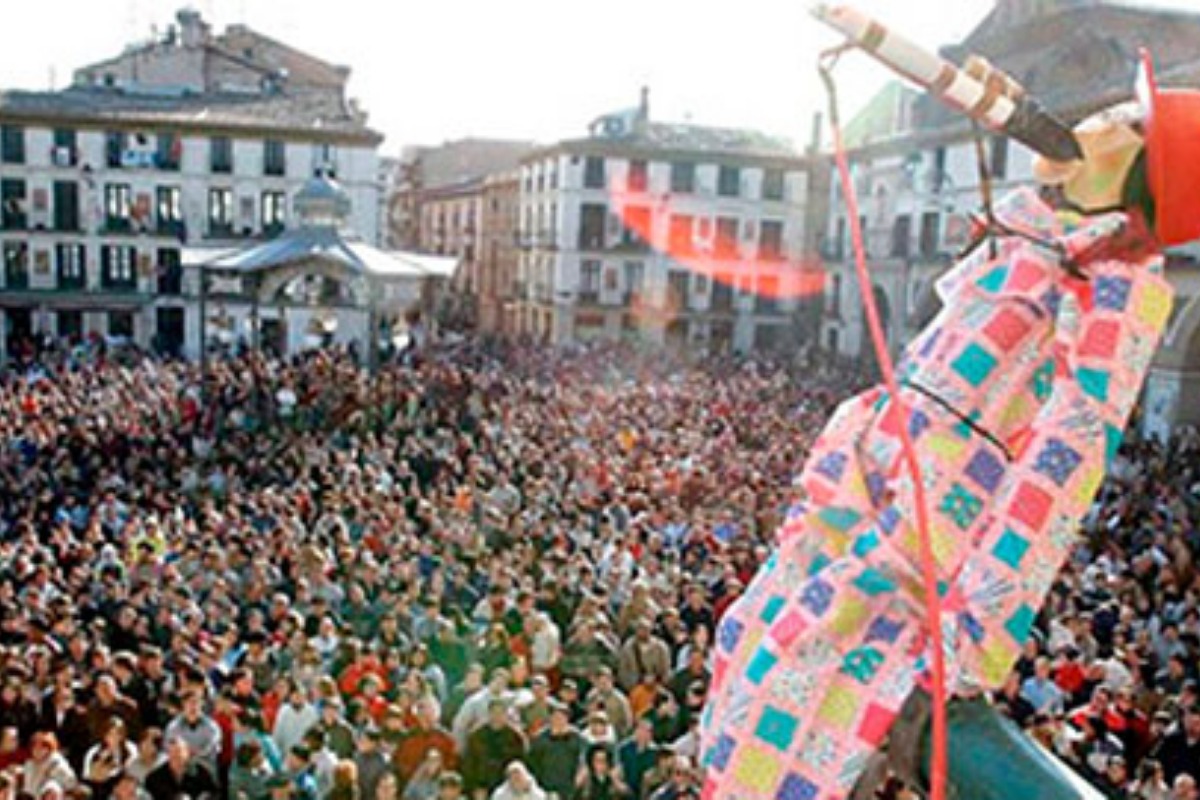
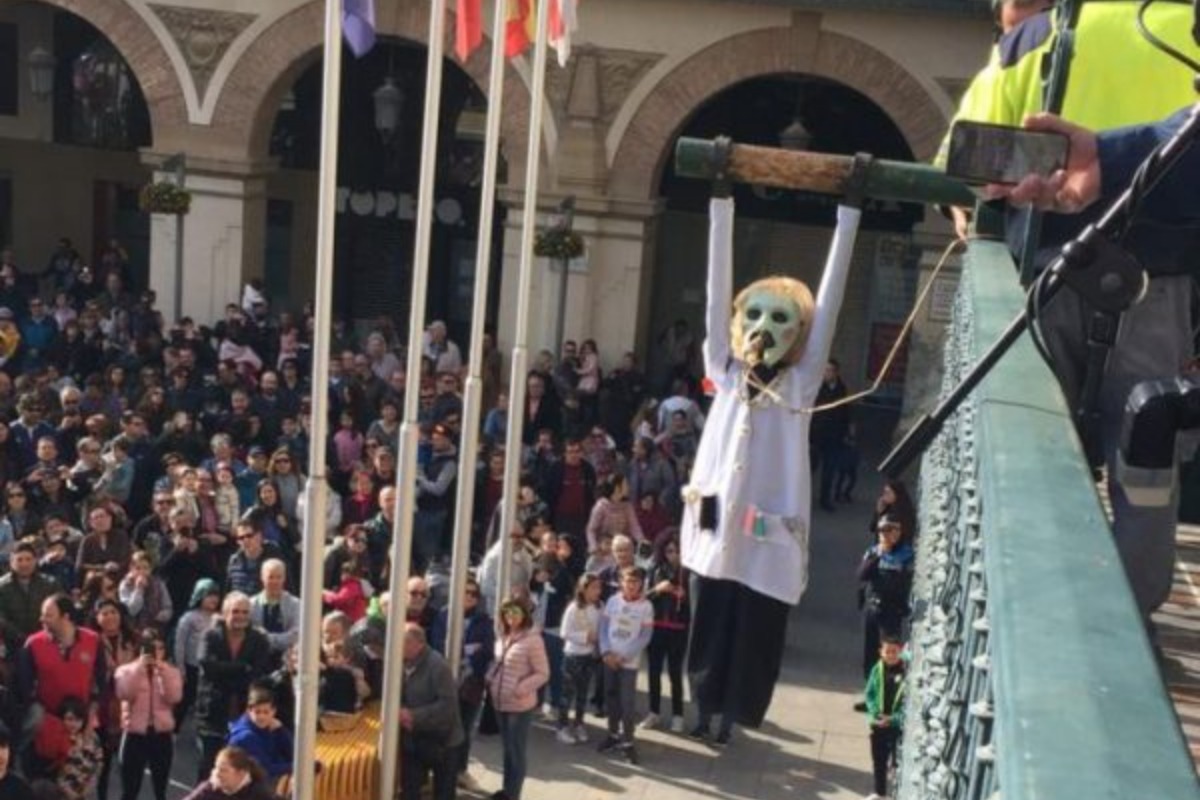
On Holy Saturday, and at 10 in the morning, an articulated wooden doll, 'El Volatín' dressed ridiculously and with a huge cigar-firecracker in his mouth, has made an appearance since 1851, on the balcony of the Clock House in the Plaza de los Fueros, and undergoes a merciless and frantic dance.
The explosion of the cigar in the Volatín's nose gives way to the bloodless and naive popular celebration. The winch to which the doll is attached is moved to the right and left, with more and more turns, until it loses its clothing.
This is how this simple ceremony has come down to us that stages the desperate death of Judas Iscariot, for having betrayed Christ.
The Descent of the Angel:
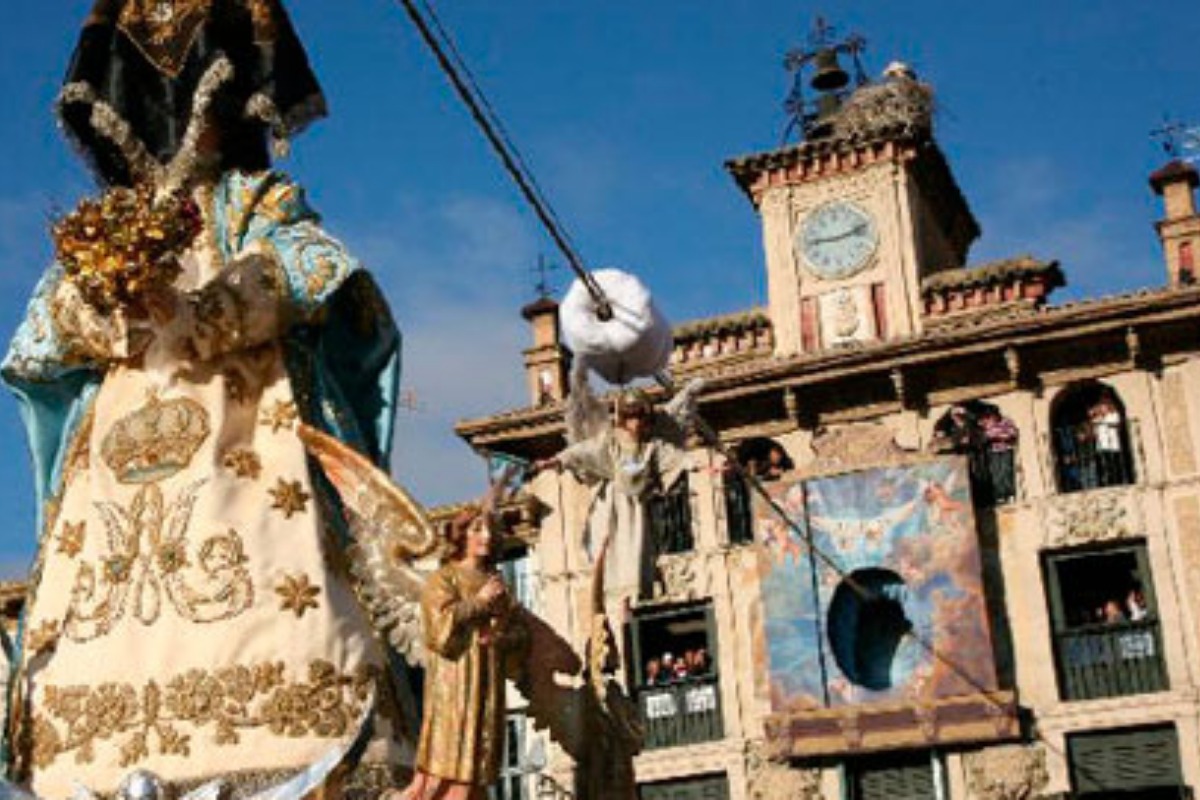
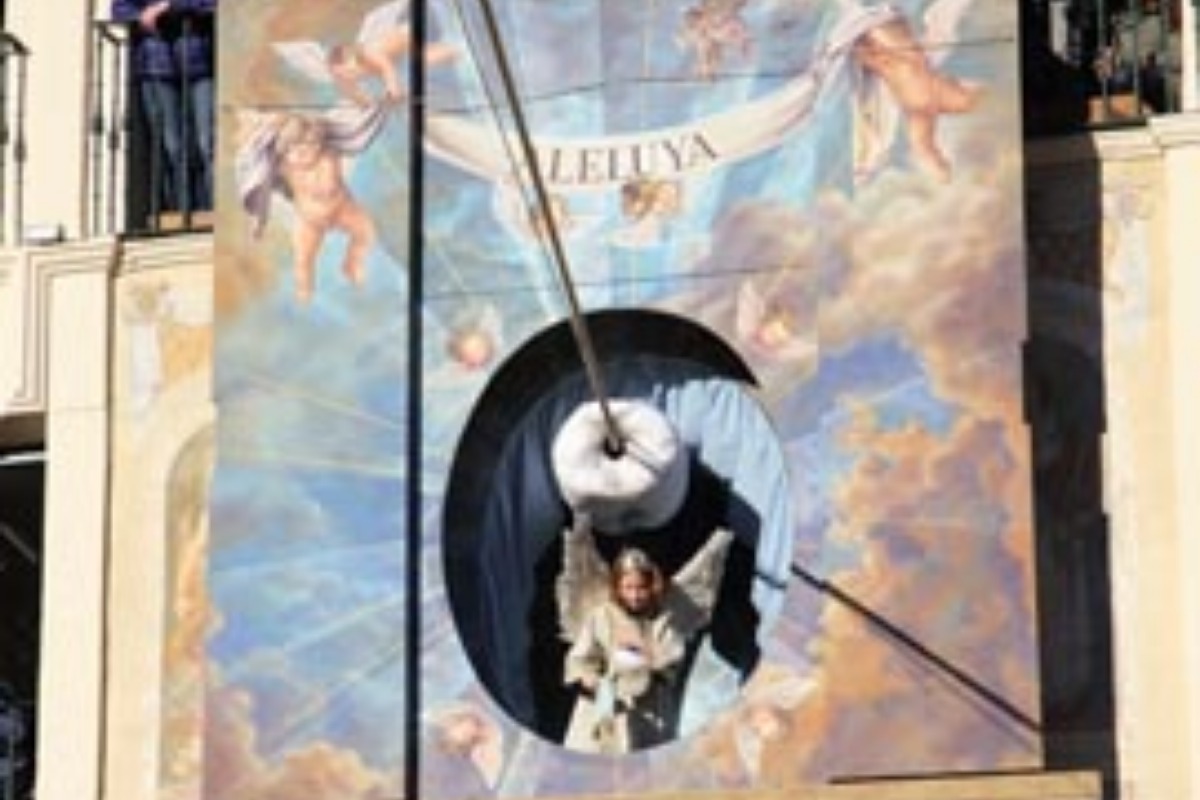
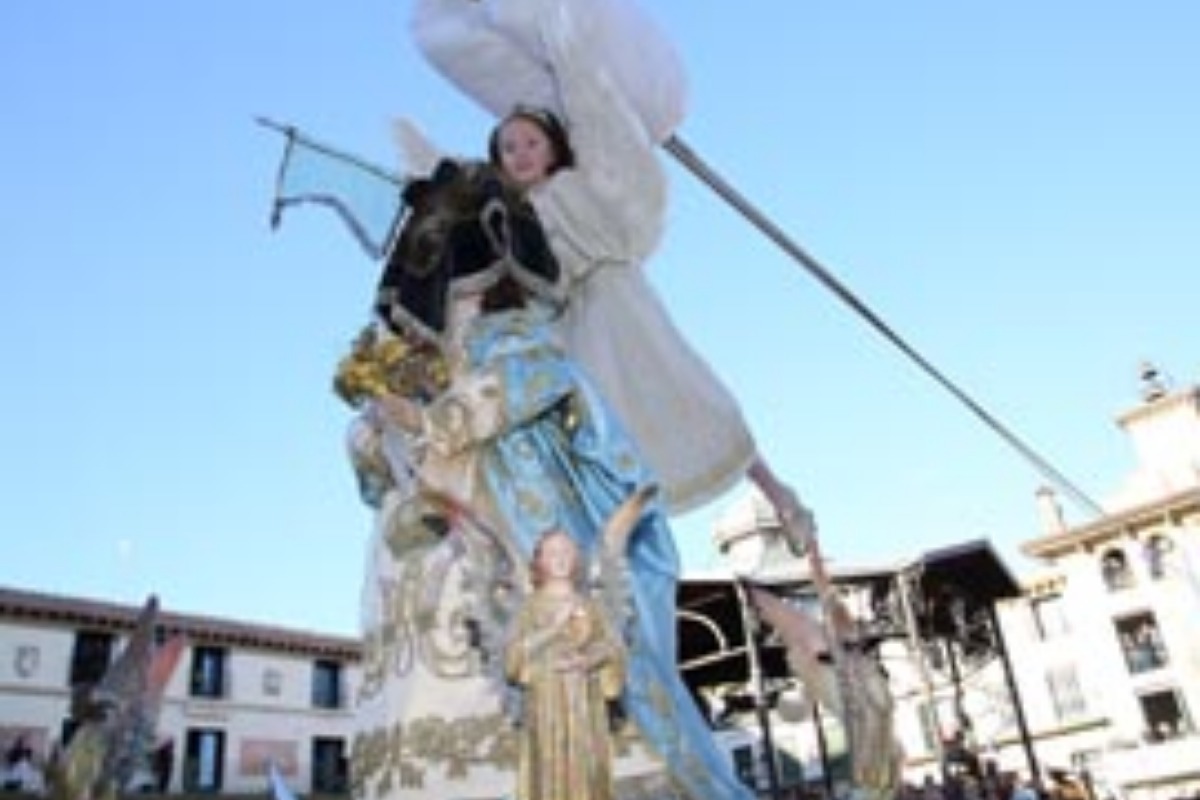
As old as the Volatín is the descent of the Angel, so called because a child, dressed as an angel, suspended on a rope, is carried by means of a winch, through the Plaza de los Fueros, until reaching where, brought in a procession accompanying the Blessed Sacrament, they have on their shoulders the image of the Virgin, her head covered with a black veil as a sign of the sadness caused by the death of her Son Jesus Christ.
The Angel removes her veil as a sign of joy for the resurrection of Christ, saying 'Rejoice Mary, your Son has risen'.
Until April 1851, this ceremony was held in the Plaza Vieja, moving to the Plaza de los Fueros by municipal agreement. Here since then and without variation, it continues to be celebrated at 9 in the morning on Easter Sunday.
These ceremonies have not always been celebrated as they are today or in the same places, but at all times their naivety, their religious meaning and therefore their popular essence have been and are fully maintained.
The Volatín:
On Holy Saturday, and at 10 in the morning, an articulated wooden doll, 'El Volatín' dressed ridiculously and with a huge cigar-firecracker in his mouth, has made an appearance since 1851, on the balcony of the Clock House in the Plaza de los Fueros, and undergoes a merciless and frantic dance.
The explosion of the cigar in the Volatín's nose gives way to the bloodless and naive popular celebration. The winch to which the doll is attached is moved to the right and left, with more and more turns, until it loses its clothing.
This is how this simple ceremony has come down to us that stages the desperate death of Judas Iscariot, for having betrayed Christ.
The Descent of the Angel:
As old as the Volatín is the descent of the Angel, so called because a child, dressed as an angel, suspended on a rope, is carried by means of a winch, through the Plaza de los Fueros, until reaching where, brought in a procession accompanying the Blessed Sacrament, they have on their shoulders the image of the Virgin, her head covered with a black veil as a sign of the sadness caused by the death of her Son Jesus Christ.
The Angel removes her veil as a sign of joy for the resurrection of Christ, saying 'Rejoice Mary, your Son has risen'.
Until April 1851, this ceremony was held in the Plaza Vieja, moving to the Plaza de los Fueros by municipal agreement. Here since then and without variation, it continues to be celebrated at 9 in the morning on Easter Sunday.
Imagen principal
Galería de imágenes
Orden
7