Imagen principal
Dirección
Plaza vieja
Categoría
Ubicación
42.063843198398, -1.6056921872065
Descripción corta
It is the most important of the three doors of the Cathedral.
Descripción larga
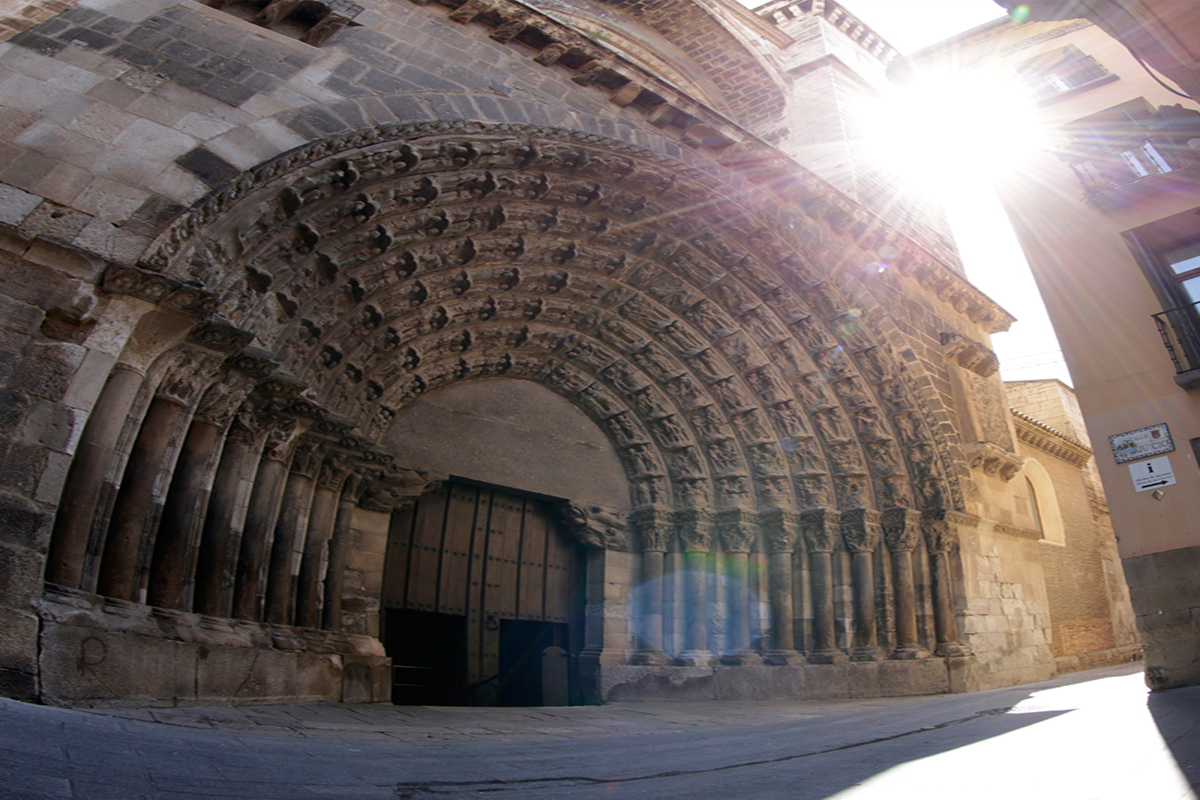
This monumental door located to the west, at the foot of the temple, is the most important of the three doors of the Cathedral. It is Gothic, from the beginning of the 13th century, with 8 slightly pointed archivolts. The iconography allusive to the Last Judgment stands out, with a division in two halves, to the left of the spectator the Blessed and to the right the damned souls. In the tympanum there was possibly a polychrome Pantocrator, like the rest of the doorway, receiving the name of "Painted Door" for this reason.
It is the most important of the three doors of the Cathedral, through which most of the Christian faithful who attended daily liturgies used to enter. It is located to the west, at the foot of the church.
The chronology is from the 13th century, one of the last stages of the construction of the Collegiate Church. Its style is a mixture between Romanesque, for its iconography, and Gothic for its structure and images.
From the formal and stylistic point of view, the abundant sculpture represented is inspired by French models of the late Romanesque and especially by the south portal of Chartres.
The structure of the doorway is simple, consisting of a large pointed opening flared by eight archivolts cut into a total of 122 voussoirs. We highlight their iconography, which rest on eight columns on each side.
The iconographic content of the cover is especially interesting. The capitals are dedicated to scenes from the Genesis and the Old Testament.
The most outstanding feature is found in the images on the voussoirs of the arches, with a representation of the Last Judgment, divided into two halves. It is important to note the central scene in the tympanum, now lost, with Christ as the judge of the Second Coming in polychrome, like the rest of the sculpture; and this color-finish made it colloquially known as the "Painted Door".
The arches are divided into two halves: The representations to the right of the Father (the viewer's left) are identified to the group of the Blessed, the representation of Paradise, and to his left (the viewer’s right) there are the damned and significant scenes of hell, with allusions to punishments, among which stand out the lust, greed, gluttony, blasphemy....
As a whole, it is an open book to teach the Christian faithful, in an era when reading and writing was uncommon among the general population, so that the ultimate purpose of this cover is the teaching of the Holy Scriptures with a clear moralizing intention.
It is the most important of the three doors of the Cathedral, through which most of the Christian faithful who attended daily liturgies used to enter. It is located to the west, at the foot of the church.
The chronology is from the 13th century, one of the last stages of the construction of the Collegiate Church. Its style is a mixture between Romanesque, for its iconography, and Gothic for its structure and images.
From the formal and stylistic point of view, the abundant sculpture represented is inspired by French models of the late Romanesque and especially by the south portal of Chartres.
The structure of the doorway is simple, consisting of a large pointed opening flared by eight archivolts cut into a total of 122 voussoirs. We highlight their iconography, which rest on eight columns on each side.
The iconographic content of the cover is especially interesting. The capitals are dedicated to scenes from the Genesis and the Old Testament.
The most outstanding feature is found in the images on the voussoirs of the arches, with a representation of the Last Judgment, divided into two halves. It is important to note the central scene in the tympanum, now lost, with Christ as the judge of the Second Coming in polychrome, like the rest of the sculpture; and this color-finish made it colloquially known as the "Painted Door".
The arches are divided into two halves: The representations to the right of the Father (the viewer's left) are identified to the group of the Blessed, the representation of Paradise, and to his left (the viewer’s right) there are the damned and significant scenes of hell, with allusions to punishments, among which stand out the lust, greed, gluttony, blasphemy....
As a whole, it is an open book to teach the Christian faithful, in an era when reading and writing was uncommon among the general population, so that the ultimate purpose of this cover is the teaching of the Holy Scriptures with a clear moralizing intention.
Destacado
Activado