Imagen principal
Dirección
C/ Magallon 7
Galería de imágenes
Categoría
Ubicación
42.06343, -1.60422
Descripción corta
Renaissance building built in the 16th century as the residence of the Magallón family, marquises of Saint Adrian.
Descripción larga
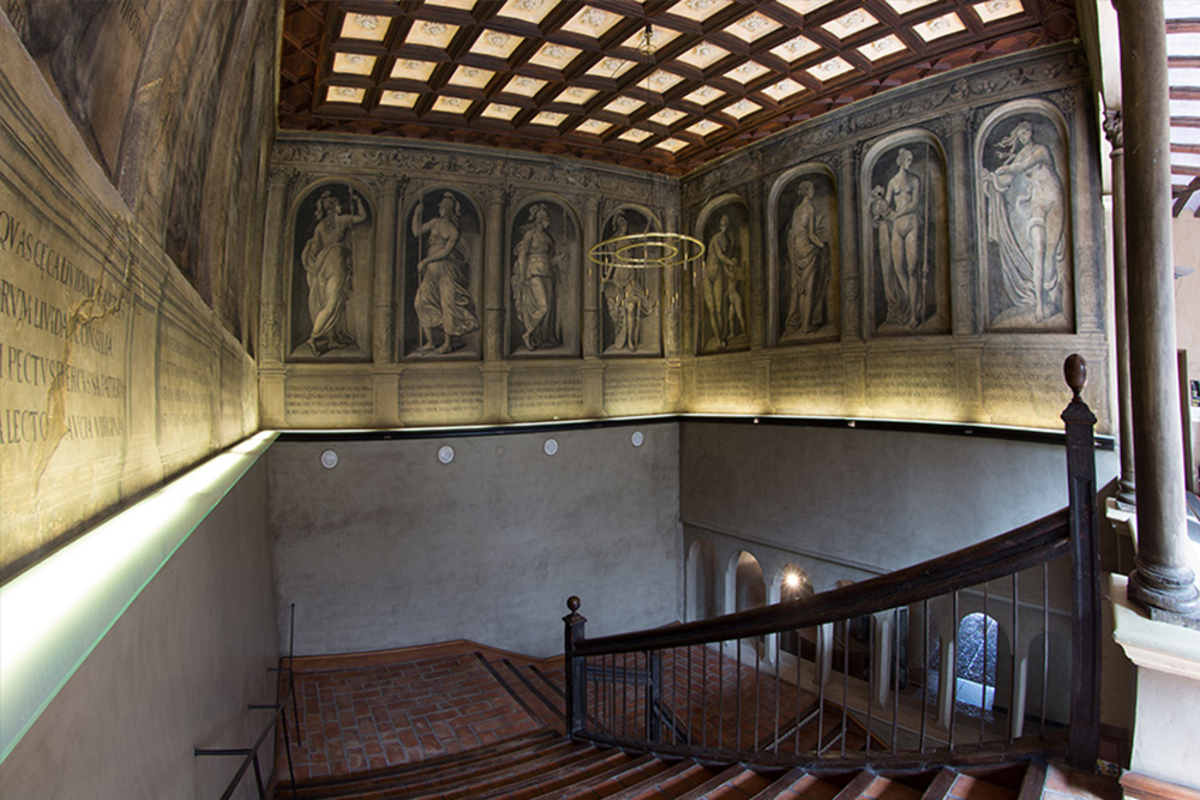
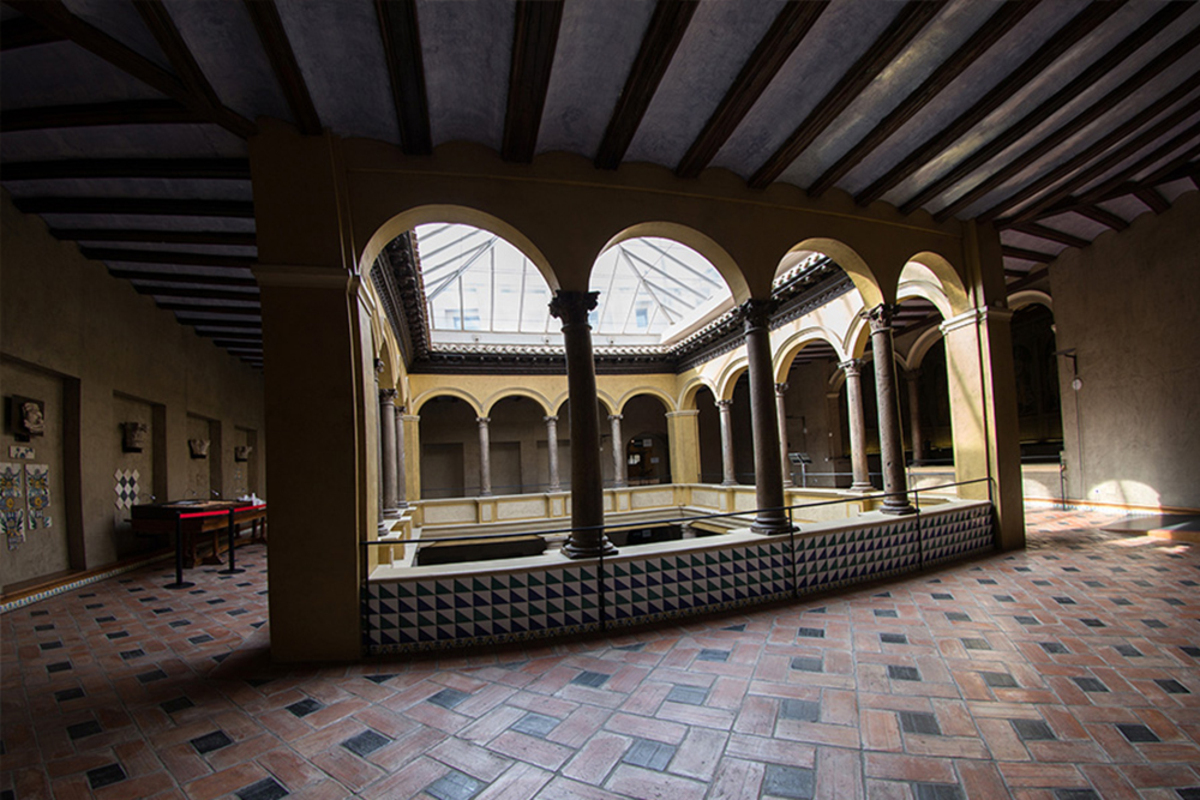
It has a sober façade crowned by an ornate wooden eave, traditionally attributed to Esteban de Obray. The interior is articulated around a courtyard with two floors connected by a staircase decorated with grisaille paintings depicting twelve women from Classical Antiquity representing different virtues. Today it is the headquarters of the National University of Distance Education.
It is the most important architectural reference of Renaissance stately architecture in the south of Navarre. The construction began in the 15th century with the purchase of the adjoining houses for the enlargement of the old manor house of the Magallón family, future Marquises of Saint Adrian. From 1552 until 1556, Mr. Pedro de Magallón y Veráiz, decided to build a new palace following the design of those being built at that time in Italy. Apart from the Italian Renaissance influence, we see in the building the architectural model that had been imposed by the Court of Zaragoza for the palaces: a large austere brick façade with a main floor crowned with an attic with continuous arches. The construction, which has been attributed to the master builder Juan de San Juan, includes a façade, patio, staircase and interior rooms.
The entire exterior is protected by a magnificent carved wooden eave that is traditionally attributed to Esteban de Obray, although there is no documentation of this. The corbels are ornamented with figures of thirteen Atlantean children carrying different attributes in their hands, like for example musical instruments. On the roof of the eaves there are polygonal coffers decorated with vegetal pendants.
The work was continued by his son, Mr. Pedro de Magallón y Villalón, with the completion of the courtyard, staircase and its decoration with grisaille between 1569-1570, coinciding with the preparation of his wedding to Lady Laura of Soria.
Inside we find a central courtyard, the ground floor linteled with Tuscan columns and the first floor with arches resting on vegetal capitals. From here are distributed the noble rooms, some of which have continuous friezes decorated with Renaissance elements.
It is remarkable the staircase of quadrangular box covered with coffered ceiling, with three sections to which it is acceded by means of a triumphal arch. Its walls are covered with mural paintings made with grisaille and dated from the second half of the 16th century, attributed to the painter Pietro Morone, have a mannerist style influenced by the engravings of Raphael. They simulate niches that represent twelve illustrious women taken from mythological antiquity and Greco-Latin history and legend. They can be categorized into three sections: goddesses, warriors and virtuous women. This singular iconographic program is unique in humanism in Spain and it exalts the excellence of women as a moral mirror in which to be reflected.
Regarding the movable goods that the palace had, we can highlight a large library and the carriage of the 18th century, which are currently deposited in the Palace of the Marquis of Huarte. And the portraits of the Marquis of Saint Adrian and his wife, painted by Francisco de Goya, which are nowadays kept in the Museum of Navarre and in the Paul Getty Foundation respectively.
The Marquises of Saint Adrian lived in the palace until the middle of the 20th century, when it was used for other purposes, until it was bought and restored by the City Council, which has been using it as the home of the National University of Distance Education in Tudela since the 1990s.
It is the most important architectural reference of Renaissance stately architecture in the south of Navarre. The construction began in the 15th century with the purchase of the adjoining houses for the enlargement of the old manor house of the Magallón family, future Marquises of Saint Adrian. From 1552 until 1556, Mr. Pedro de Magallón y Veráiz, decided to build a new palace following the design of those being built at that time in Italy. Apart from the Italian Renaissance influence, we see in the building the architectural model that had been imposed by the Court of Zaragoza for the palaces: a large austere brick façade with a main floor crowned with an attic with continuous arches. The construction, which has been attributed to the master builder Juan de San Juan, includes a façade, patio, staircase and interior rooms.
The entire exterior is protected by a magnificent carved wooden eave that is traditionally attributed to Esteban de Obray, although there is no documentation of this. The corbels are ornamented with figures of thirteen Atlantean children carrying different attributes in their hands, like for example musical instruments. On the roof of the eaves there are polygonal coffers decorated with vegetal pendants.
The work was continued by his son, Mr. Pedro de Magallón y Villalón, with the completion of the courtyard, staircase and its decoration with grisaille between 1569-1570, coinciding with the preparation of his wedding to Lady Laura of Soria.
Inside we find a central courtyard, the ground floor linteled with Tuscan columns and the first floor with arches resting on vegetal capitals. From here are distributed the noble rooms, some of which have continuous friezes decorated with Renaissance elements.
It is remarkable the staircase of quadrangular box covered with coffered ceiling, with three sections to which it is acceded by means of a triumphal arch. Its walls are covered with mural paintings made with grisaille and dated from the second half of the 16th century, attributed to the painter Pietro Morone, have a mannerist style influenced by the engravings of Raphael. They simulate niches that represent twelve illustrious women taken from mythological antiquity and Greco-Latin history and legend. They can be categorized into three sections: goddesses, warriors and virtuous women. This singular iconographic program is unique in humanism in Spain and it exalts the excellence of women as a moral mirror in which to be reflected.
Regarding the movable goods that the palace had, we can highlight a large library and the carriage of the 18th century, which are currently deposited in the Palace of the Marquis of Huarte. And the portraits of the Marquis of Saint Adrian and his wife, painted by Francisco de Goya, which are nowadays kept in the Museum of Navarre and in the Paul Getty Foundation respectively.
The Marquises of Saint Adrian lived in the palace until the middle of the 20th century, when it was used for other purposes, until it was bought and restored by the City Council, which has been using it as the home of the National University of Distance Education in Tudela since the 1990s.
Destacado
Activado