Imagen principal
Dirección
C/ Torre Monreal 8
Categoría
Ubicación
42.05886, -1.60628
Descripción corta
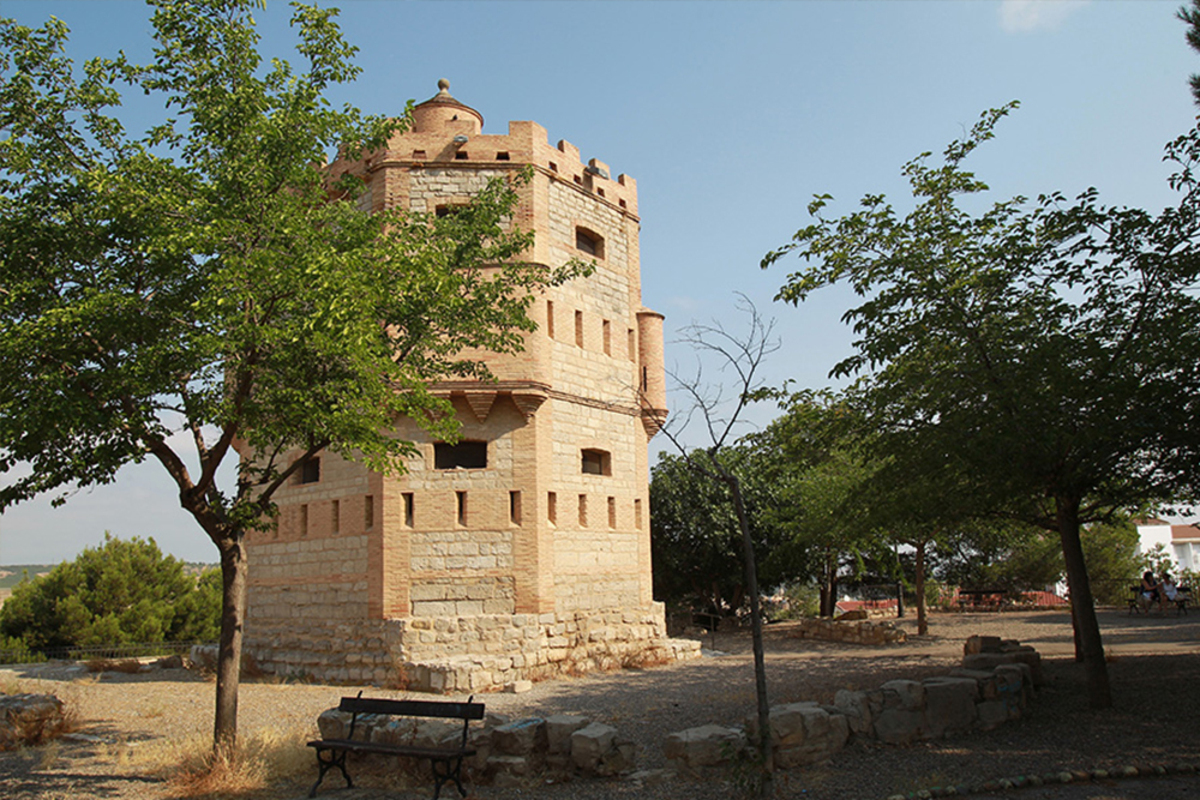
Tower of defense of the city of Tudela of medieval origin, located on a high hill for better surveillance.
Descripción larga
It underwent different transformations throughout its history and was almost completely demolished in 1813 as it was a French fortress. Its current appearance dates from the last Carlist war and was rebuilt in 1962 by the Prince of Viana Institution. Of its original stage it conserves in its interior a cistern where there is a camera obscura installed at the moment.
The Monreal tower is one of several watchtowers that were formerly in the mountains of Tudela. It stands on a hill overlooking the city in the opposite direction to the Hill of Saint Barbara, where the Citadel or Castle of Tudela was located. Formerly, this hill must have been known as Mount of the King or Mount Royal (Mont Real), from which it derives its name.
Today we can still see the remains of other fortifications in the mountains of Saint Julian and such of Cierzo. All of them had a defensive function and served to monitor the movements of the enemy or to warn of their incursions.
This tower already existed in 1276, since Lope Ortiz de Montagut, Justice and Bailiff of Tudela, pays homage to Queen Jean for the Castle of Fontellas and Monreal Tower of Tudela; in 1294 the same Ortiz is Warden of the Monreal Tower. As there are no written reports of it until the 13th century, some authors consider that it was originally from the Christian era.
It suffered different transformations throughout its history. It was lowered and walled during the War of Succession. In 1813 it was demolished almost entirely by Espoz y Mina as it had been a French fortress. In its present form it was built during the last Carlist war at the end of the 19th century, remaining as an octagonal construction of three sections with a crenellated top. In 1962 it was rebuilt by the "Prince of Viana Institution".
Its original construction had a rectangular floor plan, with sides measuring 9.85 and 8.20 meters. It was divided into several floors, reserving the lower one for a cistern or subway tank for storing drinking water from rainfall, which is the only original part that remains in good condition to the present day.
It currently has a camera obscura installed inside. It is a device like a viewfinder-periscope, which rotates 360 degrees on the roof and collects the image of the surrounding area in real time. It also has explanatory panels of the different cultures that have been significant in our city throughout its history.
The Monreal tower is one of several watchtowers that were formerly in the mountains of Tudela. It stands on a hill overlooking the city in the opposite direction to the Hill of Saint Barbara, where the Citadel or Castle of Tudela was located. Formerly, this hill must have been known as Mount of the King or Mount Royal (Mont Real), from which it derives its name.
Today we can still see the remains of other fortifications in the mountains of Saint Julian and such of Cierzo. All of them had a defensive function and served to monitor the movements of the enemy or to warn of their incursions.
This tower already existed in 1276, since Lope Ortiz de Montagut, Justice and Bailiff of Tudela, pays homage to Queen Jean for the Castle of Fontellas and Monreal Tower of Tudela; in 1294 the same Ortiz is Warden of the Monreal Tower. As there are no written reports of it until the 13th century, some authors consider that it was originally from the Christian era.
It suffered different transformations throughout its history. It was lowered and walled during the War of Succession. In 1813 it was demolished almost entirely by Espoz y Mina as it had been a French fortress. In its present form it was built during the last Carlist war at the end of the 19th century, remaining as an octagonal construction of three sections with a crenellated top. In 1962 it was rebuilt by the "Prince of Viana Institution".
Its original construction had a rectangular floor plan, with sides measuring 9.85 and 8.20 meters. It was divided into several floors, reserving the lower one for a cistern or subway tank for storing drinking water from rainfall, which is the only original part that remains in good condition to the present day.
It currently has a camera obscura installed inside. It is a device like a viewfinder-periscope, which rotates 360 degrees on the roof and collects the image of the surrounding area in real time. It also has explanatory panels of the different cultures that have been significant in our city throughout its history.
Destacado
Desactivado