Imagen principal
Dirección
Carretera de Cabanillas y carretera de Pamplona
Categoría
Ubicación
42.06708, -1.60008
Descripción corta
“Humilladero” refers to the attitude of the faithful who passed before the crucifix
Descripción larga
Old Shrine of Tudela
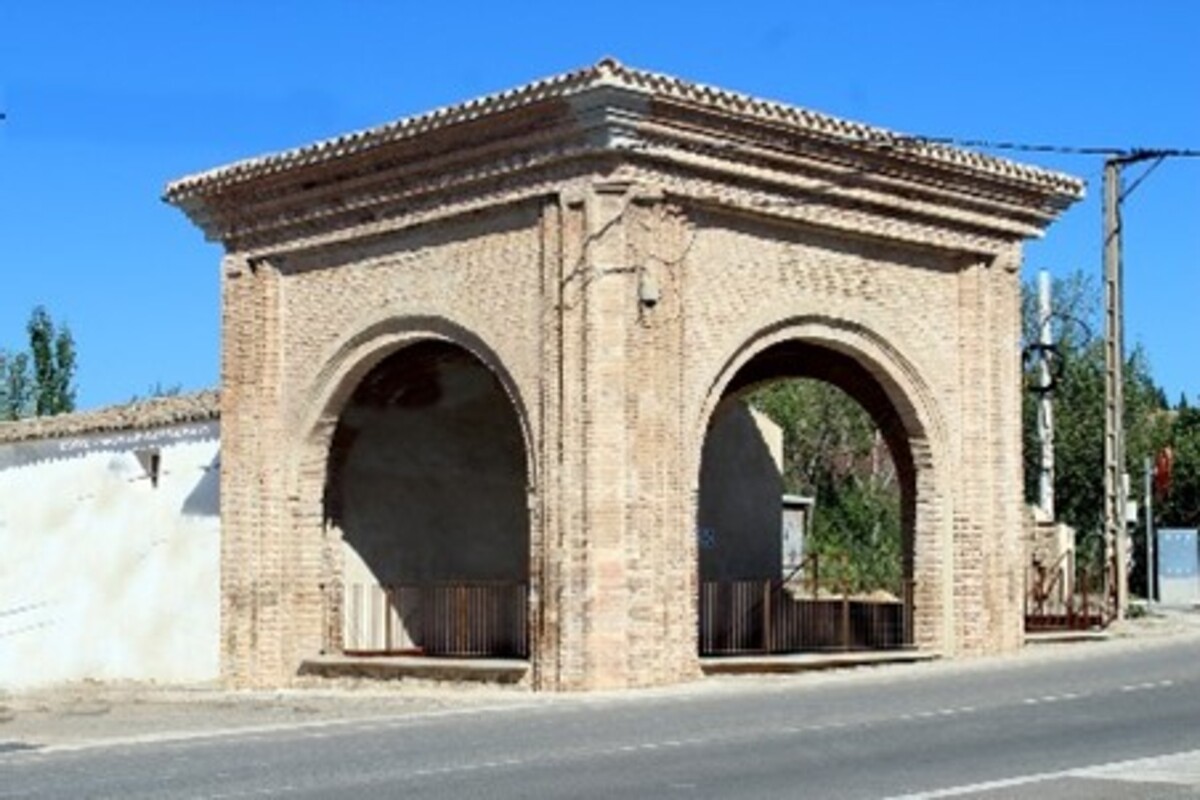
The so-called "Crucifix of the Bridge" refers to the stone cross that was placed in the 16th century at the entrance to the city from the other side of the bridge over the Ebro River, with only the Baroque brick temple that sheltered it remaining.
The term "shrine" refers to the attitude of the faithful who passed before the crucifix; that is, they lowered their heads in a sign of respect and prayer. Juan Antonio Fernández, who knew it in the 18th century, assures that this was the case "because travelers would kneel before it, both to ask the Almighty and his Most Holy Mother for prosperity during their journey, and to give thanks to God upon their return from their journey."
This shrine and others that existed in the town were all strategically placed at crossroads or access points to the city, like boundary crosses to demarcate the entrance to an urban and sacred space.
There is news of a cross in this place at the end of the 15th century, but it was in 1539 when the City Council acquired the site and promoted the construction of a stone cross on a post on steps, carved by the French sculptor Baltasar de Arras or de Febre, with Christ on one side and the Virgin Mary on the other, the construction part being the work of the stonemason brothers Pedro and Miguel Garmendia. For this purpose, the stones of the ruined Castillo Mayor were used, once the relevant Royal permission was obtained from Emperor Charles V. Around 1550, the work was completed with a hipped roof, in addition to lions on the fence parapets, installed in 1602.
To get an idea of the fabulous ensemble, one can refer to the description made by Pedro Agramont in 1632 in his manuscript on the History of Navarre: "...The foot of the cross, where the seraphim are, has no incarnation or color except the stone, the gilded cross, the Christ and the Mother of God, and Saint John on the sides. And the other Mother of God, and the apostles and the angels who bear the title of the cross are illuminated and gilded in their robes and incarnated elsewhere, with very curious artistry. The roof is gilded and the mosaic work is painted. The uncovered part, where the water flows, is all of Small tiles of dark green, sea green, and blue and white, which, when intertwined like fish scales, create a very soothing intaglio appearance.
Less than a century later, due to foundation failures, the temple that remains today had to be rebuilt. It was begun in 1690 by master builder Pedro Bretaña and completed in 1705 by Pedro Ceaorrote, now in a vibrant Baroque style with patterned brick and a hemispherical dome. The original cross was not affected by the renovation.
The decline of the monument began early in the 19th century with the War of Independence and culminated with the transformation of the Humilladero into a fortified house in 1834 during the Carlist Wars, with the addition of several buildings that could not all be removed.
Later, it was used as a Tax House and rented to private individuals for housing. It was even used as a dairy farm, which led to the loss of the cross in the early 20th century, the division into two floors, and the reduction in height of the original, graceful hipped roof.
Finally, it was sold in 1947, and it remained in a state of neglect until its restoration began in 1986 as part of the bridge restoration. It was repurchased in 1991, and after several restoration attempts due to the imminent threat of demolition, it became the target of a social movement in 2000, involving various groups and intellectuals. The first step was to reverse the process, with the first action being an archaeological study that year.
In 2018, it was included on the Red List of Heritage by the Hispania Nostra Foundation, from where it was rescued in 2023 after a thorough reconstruction that restored the original interior covering and the wall overlooking the city, which had collapsed.
The so-called "Crucifix of the Bridge" refers to the stone cross that was placed in the 16th century at the entrance to the city from the other side of the bridge over the Ebro River, with only the Baroque brick temple that sheltered it remaining.
The term "shrine" refers to the attitude of the faithful who passed before the crucifix; that is, they lowered their heads in a sign of respect and prayer. Juan Antonio Fernández, who knew it in the 18th century, assures that this was the case "because travelers would kneel before it, both to ask the Almighty and his Most Holy Mother for prosperity during their journey, and to give thanks to God upon their return from their journey."
This shrine and others that existed in the town were all strategically placed at crossroads or access points to the city, like boundary crosses to demarcate the entrance to an urban and sacred space.
There is news of a cross in this place at the end of the 15th century, but it was in 1539 when the City Council acquired the site and promoted the construction of a stone cross on a post on steps, carved by the French sculptor Baltasar de Arras or de Febre, with Christ on one side and the Virgin Mary on the other, the construction part being the work of the stonemason brothers Pedro and Miguel Garmendia. For this purpose, the stones of the ruined Castillo Mayor were used, once the relevant Royal permission was obtained from Emperor Charles V. Around 1550, the work was completed with a hipped roof, in addition to lions on the fence parapets, installed in 1602.
To get an idea of the fabulous ensemble, one can refer to the description made by Pedro Agramont in 1632 in his manuscript on the History of Navarre: "...The foot of the cross, where the seraphim are, has no incarnation or color except the stone, the gilded cross, the Christ and the Mother of God, and Saint John on the sides. And the other Mother of God, and the apostles and the angels who bear the title of the cross are illuminated and gilded in their robes and incarnated elsewhere, with very curious artistry. The roof is gilded and the mosaic work is painted. The uncovered part, where the water flows, is all of Small tiles of dark green, sea green, and blue and white, which, when intertwined like fish scales, create a very soothing intaglio appearance.
Less than a century later, due to foundation failures, the temple that remains today had to be rebuilt. It was begun in 1690 by master builder Pedro Bretaña and completed in 1705 by Pedro Ceaorrote, now in a vibrant Baroque style with patterned brick and a hemispherical dome. The original cross was not affected by the renovation.
The decline of the monument began early in the 19th century with the War of Independence and culminated with the transformation of the Humilladero into a fortified house in 1834 during the Carlist Wars, with the addition of several buildings that could not all be removed.
Later, it was used as a Tax House and rented to private individuals for housing. It was even used as a dairy farm, which led to the loss of the cross in the early 20th century, the division into two floors, and the reduction in height of the original, graceful hipped roof.
Finally, it was sold in 1947, and it remained in a state of neglect until its restoration began in 1986 as part of the bridge restoration. It was repurchased in 1991, and after several restoration attempts due to the imminent threat of demolition, it became the target of a social movement in 2000, involving various groups and intellectuals. The first step was to reverse the process, with the first action being an archaeological study that year.
In 2018, it was included on the Red List of Heritage by the Hispania Nostra Foundation, from where it was rescued in 2023 after a thorough reconstruction that restored the original interior covering and the wall overlooking the city, which had collapsed.
Destacado
Desactivado