Imagen principal
Dirección
Calle Portal, 27
Galería de imágenes
Categoría
Ubicación
42.06496, -1.60416
Descripción corta
It is the oldest temple in the city.
Descripción larga
It is the oldest temple in the city, attended by the Mozarabic community; it preserves the original door to the north crowned by a monogram of Christ. The present portal was opened at the end of the 12th century, with an outstanding sculptural repertoire.
It has several reforms in the 16th century: the choir, the altarpiece dedicated to St. Mary Magdalene, made by Domingo de Segura around 1550 and two side chapels. In one of them there is the sculpture of Saint Anne "The Old", a magnificent Hispano-Flemish carving
The church of Saint Mary Magdalene was already dedicated to Christian worship during the period of Muslim domination, serving the Mozarabic community. From this early period, the church has a nave with an irregular layout, a flat-fronted chancel and an open entrance to the north. This doorway is formed by a simple semicircular structure framed by two archivolts and crowned by a Trinitarian monogram of Christ that proves the symbolic value and function of the doorway in the medieval imaginary. It was a propitious place for the main rites of passage of Christianity, such as penitence, baptism or death.
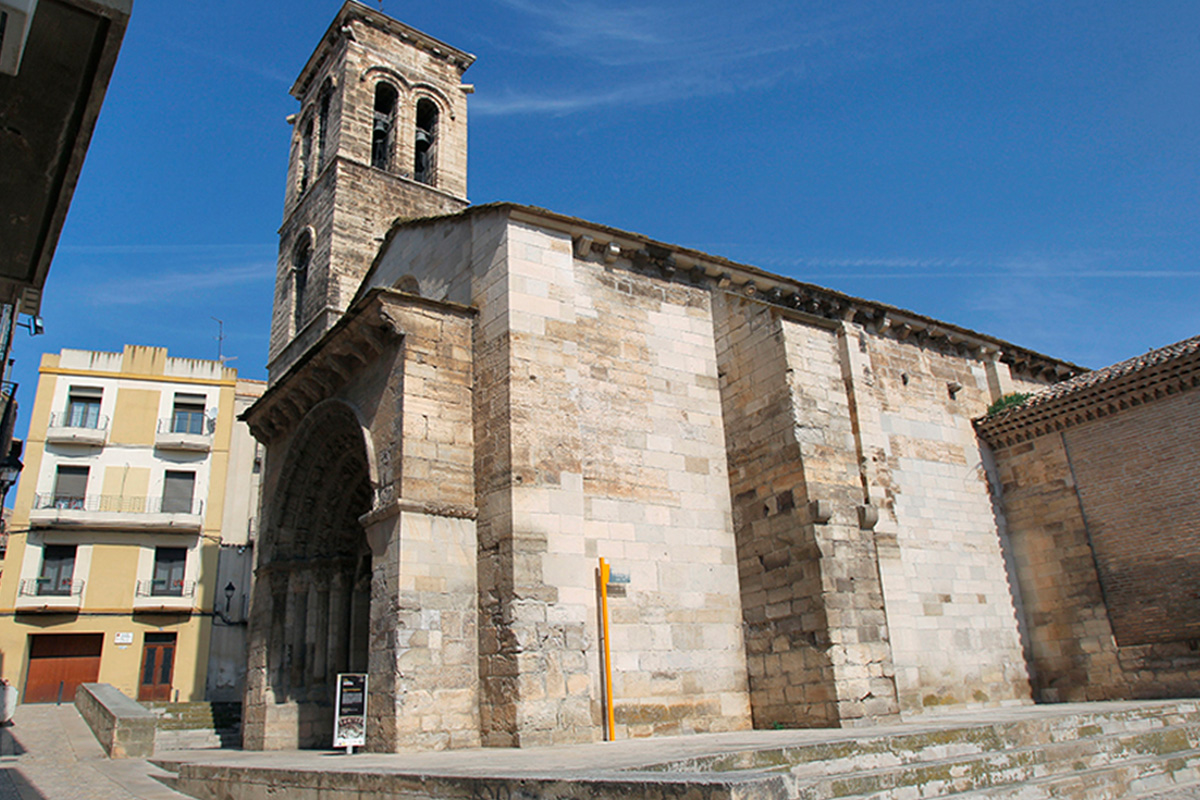
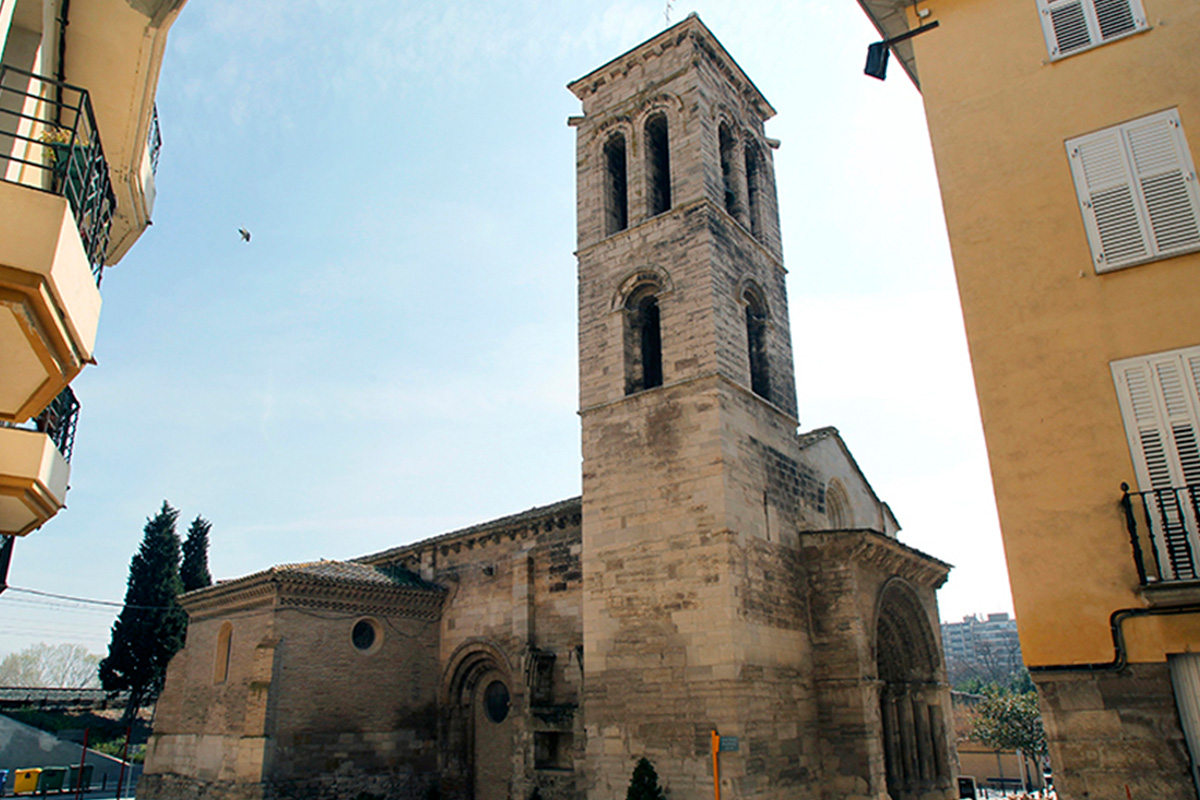
After the conquest of the Islamic medina by Alphonse the Battler in 1119, the territory became dependent on the bishopric of Tarazona, although the king donated the church of Saint Mary Magdalene to the bishop of Pamplona as a token of gratitude for the support given by the prelate in the siege and conquest of Saragossa. The new owner carried out a refurbishment in the temple adapting it to the new Roman liturgy by opening a large portal attached to the western wall at the end of the 12th century, converting this opening into the main entrance. This is a flared doorway with four semicircular archivolts. It emphasizes its sculptural decoration in which appears an apostleship according to an interpretation or characters of the Old and New Testament according to another one and in the center an Annunciation; harpies, deer eating and vegetable forms. In the capitals we see decoration allusive to the cycle of the temptations of Christ. In the tympanum presides a Pantocrator with a quadrilobulated mandorla surrounded by the Tetramorphs and on the sides Mary and Mary Magdalene. Various trades are represented in the corbels, with the exception of a representation of the devil in one of them.
The square tower is located at the foot of the church and it’s distributed in three sections with arches on columns with vegetal capitals on the two upper ones. The tower is crowned with a cornice of varied corbels on the structure of the bells.
The interior of the building is covered by a pointed barrel vault reinforced by six arches supported by columns attached to the wall, whose capitals have figurative themes with scenes of the Infancy and Public Life of Christ and plants. At this point we can appreciate the curious slightly rotated (to the left) floor plan of the temple.
With the passing of time, the primitive church underwent remodeling and enlargements materializing in several chapels. Two of the with Renaissance style have been preserved after its last intervention. The high choir and the main altarpiece dedicated to Saint Mary Magdalene, made by Domingo de Segura, also date from the 16th century. Of plateresque design, its iconography is varied based on Saints, Fathers of the Church, Evangelists, etc.
It has several reforms in the 16th century: the choir, the altarpiece dedicated to St. Mary Magdalene, made by Domingo de Segura around 1550 and two side chapels. In one of them there is the sculpture of Saint Anne "The Old", a magnificent Hispano-Flemish carving
The church of Saint Mary Magdalene was already dedicated to Christian worship during the period of Muslim domination, serving the Mozarabic community. From this early period, the church has a nave with an irregular layout, a flat-fronted chancel and an open entrance to the north. This doorway is formed by a simple semicircular structure framed by two archivolts and crowned by a Trinitarian monogram of Christ that proves the symbolic value and function of the doorway in the medieval imaginary. It was a propitious place for the main rites of passage of Christianity, such as penitence, baptism or death.
After the conquest of the Islamic medina by Alphonse the Battler in 1119, the territory became dependent on the bishopric of Tarazona, although the king donated the church of Saint Mary Magdalene to the bishop of Pamplona as a token of gratitude for the support given by the prelate in the siege and conquest of Saragossa. The new owner carried out a refurbishment in the temple adapting it to the new Roman liturgy by opening a large portal attached to the western wall at the end of the 12th century, converting this opening into the main entrance. This is a flared doorway with four semicircular archivolts. It emphasizes its sculptural decoration in which appears an apostleship according to an interpretation or characters of the Old and New Testament according to another one and in the center an Annunciation; harpies, deer eating and vegetable forms. In the capitals we see decoration allusive to the cycle of the temptations of Christ. In the tympanum presides a Pantocrator with a quadrilobulated mandorla surrounded by the Tetramorphs and on the sides Mary and Mary Magdalene. Various trades are represented in the corbels, with the exception of a representation of the devil in one of them.
The square tower is located at the foot of the church and it’s distributed in three sections with arches on columns with vegetal capitals on the two upper ones. The tower is crowned with a cornice of varied corbels on the structure of the bells.
The interior of the building is covered by a pointed barrel vault reinforced by six arches supported by columns attached to the wall, whose capitals have figurative themes with scenes of the Infancy and Public Life of Christ and plants. At this point we can appreciate the curious slightly rotated (to the left) floor plan of the temple.
With the passing of time, the primitive church underwent remodeling and enlargements materializing in several chapels. Two of the with Renaissance style have been preserved after its last intervention. The high choir and the main altarpiece dedicated to Saint Mary Magdalene, made by Domingo de Segura, also date from the 16th century. Of plateresque design, its iconography is varied based on Saints, Fathers of the Church, Evangelists, etc.
Destacado
Desactivado