Imagen principal
Dirección
Calle Roso, 2
Teléfono
948 402 161
Web
https://palaciodecanaldetudela.com/palacio/palacio.html
Instagram
https://www.instagram.com/explore/locations/148662461854062/museo-de-tudela-palacio-decanal/?hl=am-et
Facebook
https://www.facebook.com/MuseoDeTudela/?locale=es_ES
Vídeo
TextInMotion-VideoSample-576p_4.mp4 (12.51 MB)
Galería de imágenes
Categoría
Ubicación
42.0633547, -1.6060675
Descripción corta
Museum of Tudela
Descripción larga
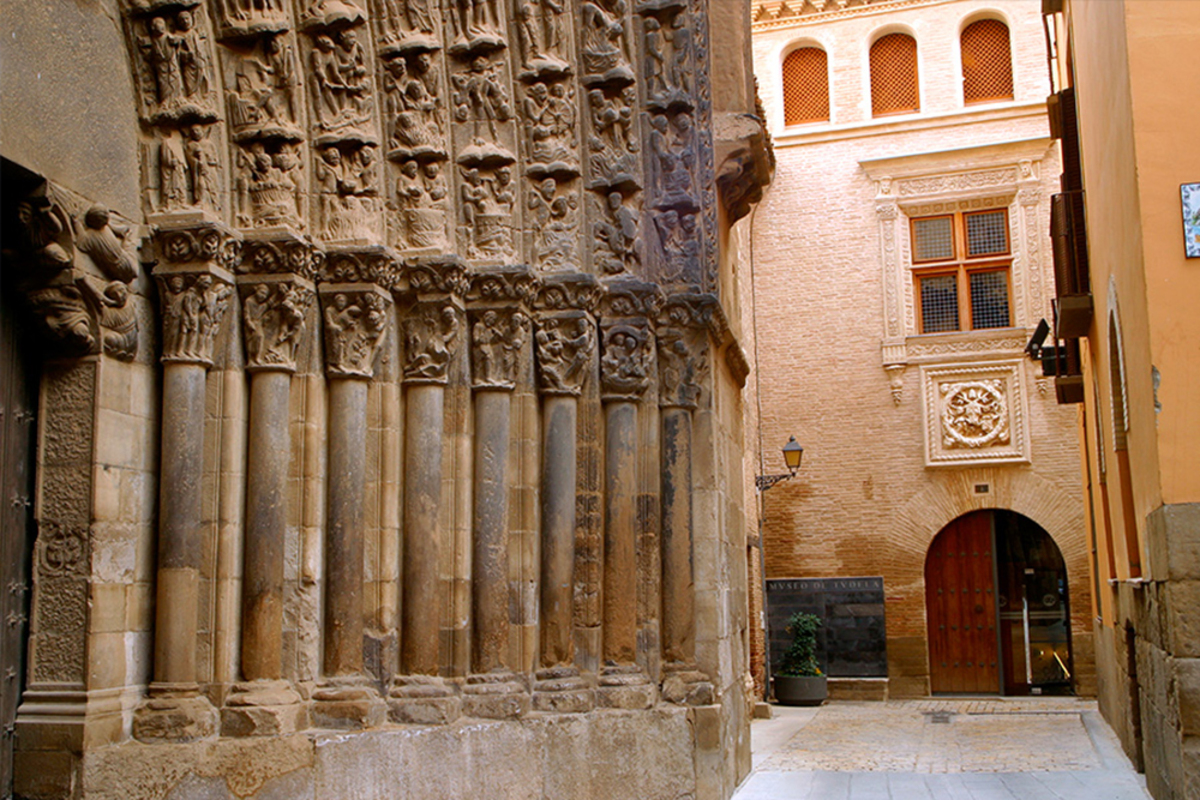
Renaissance palace renovated by Dean Villalón in 1515. On the main façade, made of brick, you can see the coat of arms of this Dean along with those of Pope Julius II, made of alabaster.
From the oldest part, a double ogee arch window and a Mudejar brick tracery facing Verjas Street are preserved.
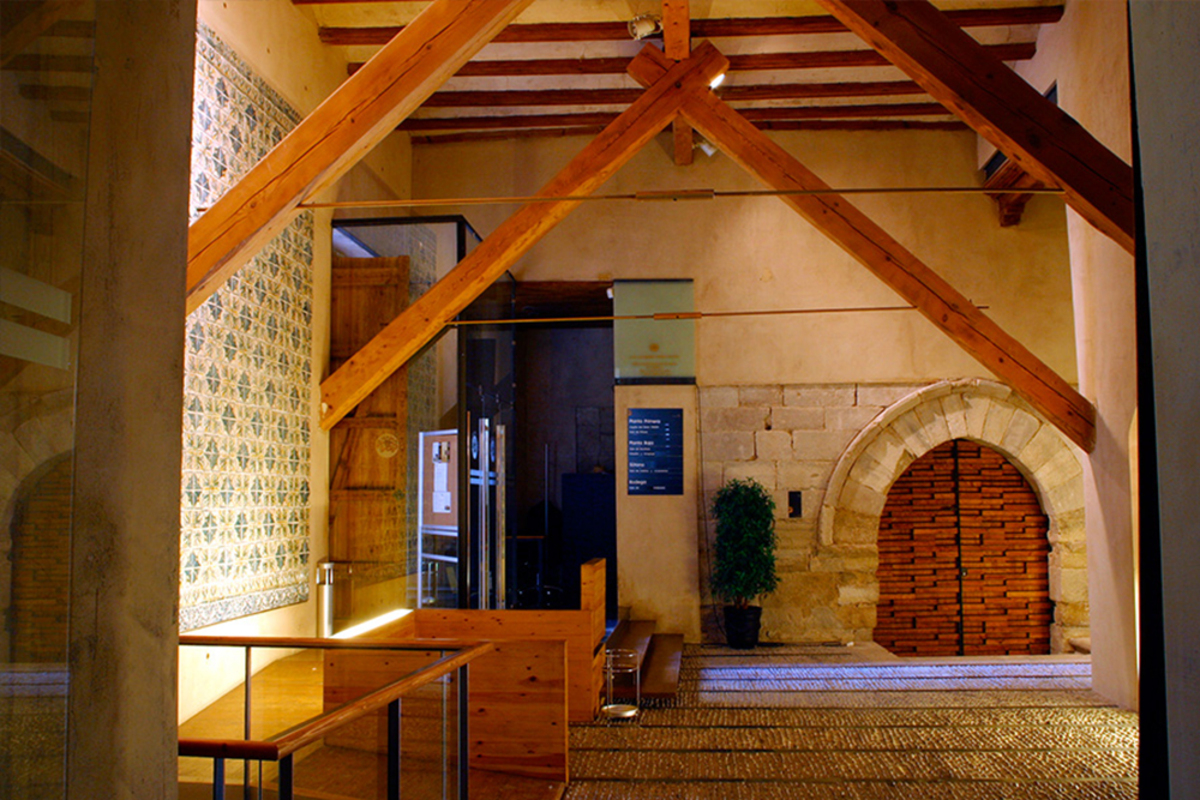
Inside, the palace's hallway and the Dean's private chapel on the main floor stand out. It is the home of the Museum of Tudela.
It is an architectural complex whose construction began at the end of the 15th century, although it experienced remodeling in the 16th, 18th and 19th centuries.
It consists of two main bodies crowned with a gallery of arches that are topped by a brick eave. Construction was already begun around 1477 in Mudejar Gothic style of which some traces still remain, highlighting a geminated window of ogee arches overlooking the street of Verjas.
The main façade is located on Roso Street. We see here the decoration in plateresque style from the beginning of the 16th century commissioned by the Dean Villalón, a humanist, who was a great connoisseur of the Renaissance artistic novelties that were being developed in Rome. He was a papal chamberlain and apostolic protonotary of Pope Julius II, whom he considered his patron, and his arms appear on the alabaster shield above the façade along with two coats of arms of Dean Villalón. The façade also features a rectangular window with jambs and lintel decorated with plasterwork in the form of columns, coffers with rosettes and candelieri decoration.
In 1831 the façade of the Saint James Square was built. The interior of the building has been restored in the 21st century. From the original structure we can only see an old staircase and an old Gothic chapel that is located in the hollow of the tower.
It is also interesting, from an architectural point of view, the medieval cellar that presents in some of its ashlars stonemason's signs that can be related to the construction of the Cathedral.
Currently the palace houses the Museum of Tudela in its oldest part, and the Ecclesiastical and parish archives, among other functions and services of the Church in the city.
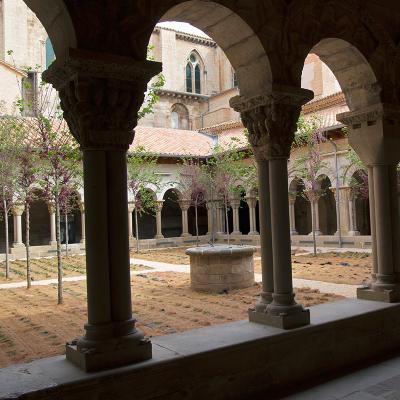
The Museum of Tudela, of diocesan ownership, treasures a collection of local sacred art (sculpture, painting, altarpieces, ornaments and gold work) and regional archaeology. It also counts with the access to visit the Romanesque cloister of the Cathedral, and the Cathedral of Tudela.
It is a very interesting museum, which highlights works of art such as the Flemish panel entitled "Last Judgment" of the school of Bosch, the baroque paintings of the painter Vicente Berdusán, some Japanese lacquers of Nanban art or the golden ceramic plate from the Andalusi period.
From the oldest part, a double ogee arch window and a Mudejar brick tracery facing Verjas Street are preserved.
Inside, the palace's hallway and the Dean's private chapel on the main floor stand out. It is the home of the Museum of Tudela.
It is an architectural complex whose construction began at the end of the 15th century, although it experienced remodeling in the 16th, 18th and 19th centuries.
It consists of two main bodies crowned with a gallery of arches that are topped by a brick eave. Construction was already begun around 1477 in Mudejar Gothic style of which some traces still remain, highlighting a geminated window of ogee arches overlooking the street of Verjas.
The main façade is located on Roso Street. We see here the decoration in plateresque style from the beginning of the 16th century commissioned by the Dean Villalón, a humanist, who was a great connoisseur of the Renaissance artistic novelties that were being developed in Rome. He was a papal chamberlain and apostolic protonotary of Pope Julius II, whom he considered his patron, and his arms appear on the alabaster shield above the façade along with two coats of arms of Dean Villalón. The façade also features a rectangular window with jambs and lintel decorated with plasterwork in the form of columns, coffers with rosettes and candelieri decoration.
In 1831 the façade of the Saint James Square was built. The interior of the building has been restored in the 21st century. From the original structure we can only see an old staircase and an old Gothic chapel that is located in the hollow of the tower.
It is also interesting, from an architectural point of view, the medieval cellar that presents in some of its ashlars stonemason's signs that can be related to the construction of the Cathedral.
Currently the palace houses the Museum of Tudela in its oldest part, and the Ecclesiastical and parish archives, among other functions and services of the Church in the city.
The Museum of Tudela, of diocesan ownership, treasures a collection of local sacred art (sculpture, painting, altarpieces, ornaments and gold work) and regional archaeology. It also counts with the access to visit the Romanesque cloister of the Cathedral, and the Cathedral of Tudela.
It is a very interesting museum, which highlights works of art such as the Flemish panel entitled "Last Judgment" of the school of Bosch, the baroque paintings of the painter Vicente Berdusán, some Japanese lacquers of Nanban art or the golden ceramic plate from the Andalusi period.
Destacado
Desactivado
Imagen destacado